

Back to the era of rich lyrics and melody?
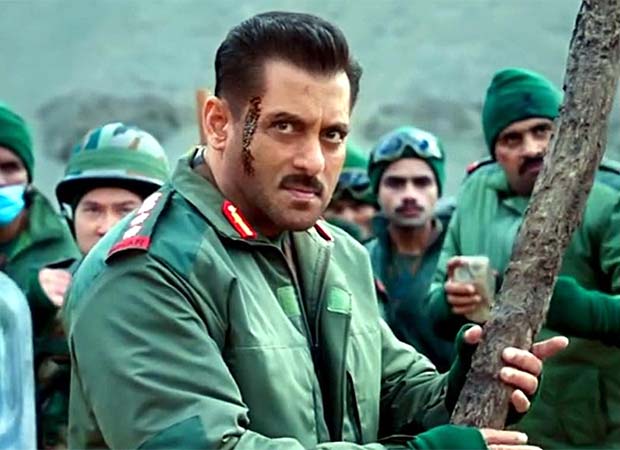
Trivia Tunes: How Battle of Galwan’s ‘Matrubhoomi’ song shows that ‘retro’ as a term is irrelevant
The lovely melody ‘Matrubhoomi aaj main sankalp loon tere liye’ from Battle of Galwan is an eye (ear?)-opener. The superbly simple lyrics by Sameer Anjaan (debut 43 years ago with Bekhabar) and the haunting tune and orchestration by Himesh Reshammiya (debut 31 years ago with the TV serial Andaz) prove that Hindi film music lovers can never tire of situational songs that are born to support a situation rather than be mechanically inserted to pander to trends and be useful at gyms, for parties and during drives.
In one fabulous stroke, the Himesh-Sameer team has shown that all it needs is a music-conscious actor-filmmaker to set right the current musical malaise and show that ‘retro’ as a term is irrelevant! As Rajesh Roshan and the Oscar-winning M.M. Keervani put it, a composition can never be retro, only the packaging gets updated. But in this Arijit Singh-Shreya Ghoshal duet, even the packaging brings back the haunting tenor genuine music lovers have been missing for decades.
They linger still
All this proves that the genuine breed of composers that Hindi cinema has been blessed with are just craving for the right break, the way Himesh has got in the Salman Khan home production after a four-year lacuna. And waiting in the wings to prove themselves are, to give only two such examples, Rajesh Roshan and Anu Malik.
Coming to Border 2, the only songs that linger in mind are ‘Ghar kab aaoge’ (the retitled version of ‘Sandesen aate hain’) and ‘To chalun’ (‘Ae jaate hue lamhon’). The powerful tunes (by Anu Malik) and words (Javed Akhtar) continue to play on, entrenched in our minds irrevocably. The same was the case with the re-created songs of Gadar 2 (‘Udd jaa kaale kaava’ and ‘Main nikla gaadi leke’), composed by Uttam Singh (debut in 1983) and written by Anand Bakshi (debut in 1957)!
Did Arijit realize the lacuna between his talent and choices?
After the Sanu-Udit-Abhijeet generation we had KK, Sonu and Shaan. After them, Arijit Singh was running a one-horse race among playback singers, also getting the maximum ‘clones’ or mimics any singer had in just a decade-old career. Arijit’s sensational decision to quit playback singing may have possibly arisen from his realizing the wide chasm between his talent, solid musical grounding and the choices offered to him as a singer.
So while the opportunity to contribute to ‘Ghar kab aaoge’ (Border 2) may have made Arijit realize the glaring gap between true melody and lyrics and the vast majority of song assignments he was getting as of now, the ‘Matrubhoomi’ song might have been the last straw. This is just a thought, but one with a valid base, as Arijit has expressed a desire to experiment with classical music as well.
Labels for songs
A disdainful trend today is to label songs as Hip-Hop (even when they are not!), Blues, Lounge or Club. Forget the basic labels of ‘Good’ and ‘Bad’, our eternal songs and scores had been always compartmentalized into romantic songs, children’s songs, patriotic numbers, bhajans, ghazals, qawwalis, disco / pop, cabarets, sad songs and so on. Methinks that while it is okay to pander to global popularity, we can only score truly high if we can be purely local to truly attract global audiences.
Being local, going global
A few examples here to prove my point: Shankar-Jaikishan’s ‘Awara hoon’ (Awara) was a cult song in Russia in the 1950s. In the early 1960s, a foreign band approached composer Ravi for permission to make their own version of ‘Baar baar dekho’ (China Town/ 1962). In the 1980s, we had ‘I am a disco dancer’, which apart from its English first line, was an Indian as we could get. In 2004, albeit in the English version, Pritam’s ‘Dhoom macha le’ (Dhoom) was cult in clubs from the USA to Europe and the Far East. In 2009, a blended adaptation of Kalyanji-Anandji’s ‘Ae naujawan’ (Apradh / 1972) and ‘Yeh mera dil pyar ka diwana’ (Don / 1978) clinched the Grammy for the black group, Black-Eyes Peas, as they took these songs with licenses for their track, ‘Don’t phunk with my heart’. There are other examples too. Bottomline: Why are we so apologetic about our own music?
Single songs by other composers in year’s highest grossers!
In 2010, Dabangg was the biggest hit, with a lovely score by Sajid-Wajid and a single ‘item’ number by Lalit Pandit, who had redone it from a Pakistani original. In 2011, Himesh Reshammiya composed the score of the year’s biggest hit, Bodyguard, with one song done by Pritam (the original choice for the film!). In 2012, Sohail Sen scored the music of the year’s highest grosser, Ek Tha Tiger, but Salman Khan brought in Sajid-Wajid as guest composers in one song. In 2013, Pritam scored its biggest hit, Dhoom:3, with one song composed by the film’s background score composer, Julius Packiam! Imagine, almost half that decade saw this “lucky” (for a film!) trend that no one caught on. Otherwise, this ‘formula’ just might have been followed…!
Tribute to colleagues
When a composer passes on, it is left to his colleagues to complete the score, and the same is true for a lyricist’s exit. Jaidev completed Madan Mohan’s Laila Majnu (1976) and Shankar-Jaikishan took on Dur Nahin Manzil (1974) after Roshan had recorded just one song for the delayed film before his death in 1967. Anu Malik completed two R.D. Burman films—Ghatak and Gang, composing just one song in the former. Dilip Sen-Sameer Sen completed RD’s Zulmi and Naushad completed Ghulam Mohammed’s Pakeezah.
Among lyricists, Majrooh Sultanpuri took on Shailendra’s Jewel Thief, Verma Malik completed Sahir Ludhianvi’s Jeeo Aur Jeene Do, while Indeevar and Kaifi Azmi shared the remaining songs for Sahir’s Deedaar-E-Yaar and Lakshmi. Anand Bakshi completed Raja Mehdi Ali Khan’s Anita, Jaal and also ghost-wrote for a Khan film composed by Madan Mohan. And Sameer wrote the final song for Majrooh’s Guru-Dev.
Also Read: Salman Khan BREAKS SILENCE on trolls over Battle of Galwan teaser expression: “Ye Colonel ka look hai”
More Pages: Battle Of Galwan Box Office Collection
BOLLYWOOD NEWS – LIVE UPDATES
Catch us for latest Bollywood News, New Bollywood Movies update, Box office collection, New Movies Release , Bollywood News Hindi, Entertainment News, Bollywood Live News Today & Upcoming Movies 2026 and stay updated with latest hindi movies only on Bollywood Hungama.


